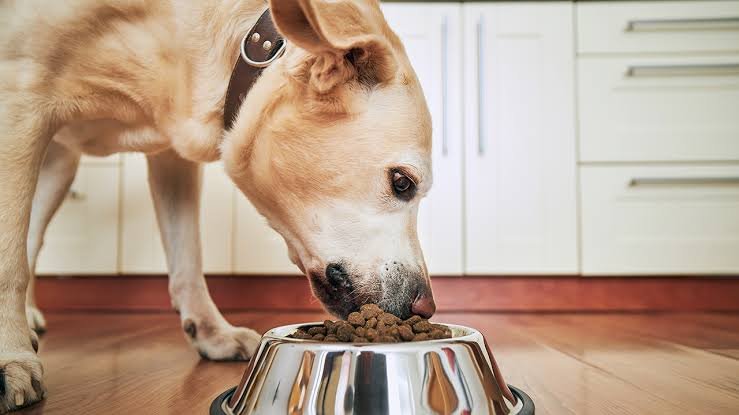
Dog food recall searches rose as pet owners checked affected products, states and safety guidance after reports of salmonella-linked illness concerns. This report explains what is confirmed, why the topic is rising and what readers should watch next.
Why Dog Food Recall is trending now
The immediate search trigger is reports that frozen dog food was recalled in multiple U.S. states because of salmonella risk and reported pet illnesses. The first wave of coverage centered on “Dog food sold in these 11 states recalled. See affected product.” From there, interest widened as Americans looked for names, dates, outcomes, video, official statements and practical follow-up information. That progression is common in fast-moving search stories: a striking headline creates awareness, while related questions reveal what readers still need to understand.
Google Trends showed the query at 50K+ searches with growth marked at 1000 percent in the active United States view for the past seven days. Those figures are rounded indicators of attention, not an opinion poll or a measure of the event's importance. A sharp percentage increase can start from a small baseline, so the volume label, timing and reporting context should be read together.
What the latest reporting confirms
At publication time, the strongest shared point across the source package is reports that frozen dog food was recalled in multiple U.S. states because of salmonella risk and reported pet illnesses. Coverage from USA Today, Fox Business, marthastewart.com, Fast Company, The Guardian provides the reporting basis for this article. Where the outlets emphasize different details, this report keeps those claims attributed instead of blending them into a single unsupported narrative. That distinction matters because details can change after an initial story is published.
The safest way to understand Dog Food Recall is to separate three things: facts directly reported by named outlets, context supplied by official organizations, and predictions or commentary about what may happen next. The first two can establish a reliable timeline. The third may help explain interest, but it should not be mistaken for a confirmed outcome. Readers should check the source dates below whenever a score, legal status, product availability or public statement may have changed.
Recent reporting snapshot
- USA Today: Dog food sold in these 11 states recalled. See affected product (August 14, 2026)
- Fox Business: Frozen dog food recalled over salmonella contamination that led to multiple pet illnesses (August 19, 2026)
- marthastewart.com: Dog Food Recalled Due to Salmonella Risk to Pets and Humans (August 18, 2026)
- Fast Company: Popular pet food recalled after 3 dogs got sick in latest U.S. salmonella scare (August 18, 2026)
- The Guardian: Dog food recalled in UK after reports of pets losing their sight (August 20, 2026)
This snapshot is intentionally source-led. It shows the range of current reporting without reproducing any publisher's article. Readers can use the links at the end of this page to verify wording, publication time and subsequent corrections directly.
The context behind the headline
A useful news account goes beyond the viral phrase. For Dog Food Recall, the durable context is reports that frozen dog food was recalled in multiple U.S. states because of salmonella risk and reported pet illnesses. That means identifying the people or institutions with authority, preserving an accurate chronology and avoiding assumptions built only from social-media reactions. The context also explains why a seemingly narrow query can grow into a national search topic within hours.
Searchers often arrive after seeing a partial headline, clipped video or screenshot. Those fragments can omit when an event occurred, whether a decision is final, or which organization supplied the information. The source package gives readers several independent reference points. Agreement across reputable reports increases confidence, while a disputed or single-source detail should remain clearly labeled until further confirmation appears.
What Americans are trying to find
Related search interest includes Dog Food Recalled, Salmonella Dog Food Recall, Frozen Dog Food Recall, Pet Food Recall. Together, those phrases map the main reader intents: understanding the basic news, locating an official result or response, learning the relevant background and finding the next scheduled update. Answering those intents clearly is more useful than repeating the same headline with minor wording changes.
For event and sports searches, readers usually need an exact date, score, lineup, broadcast option or next fixture. For politics, law and public safety, they need the responsible authority and the status of a decision. For entertainment and consumer stories, availability, cast, release timing or product details usually matter most. This article keeps those needs in view while avoiding claims that the linked reporting does not support.
How to verify new developments
Start with the newest timestamp, then identify whether the report cites a primary record, an on-the-record person or another newsroom. A later article is not automatically more accurate, but it may include an official response unavailable to earlier reporters. When the stakes involve health, law, finance or safety, readers should also check the relevant government agency, court record, company notice, league or emergency authority.
Be cautious when an account removes qualifiers such as reported, preliminary, planned or alleged. Those words signal that the evidence has limits. Also watch for old photographs recirculated as current, schedules listed in the wrong time zone, and headlines that imply a final result before one exists. A transparent update should state what changed and when rather than silently replacing the earlier version.
Why search volume can move so quickly
Trending-search data reflects acceleration. A topic can climb because a national outlet publishes new reporting, a live event reaches a decisive moment, a company issues a recall, or a public figure addresses a subject directly. Recommendation systems and social sharing can then expose the same phrase to millions of people who immediately ask similar questions. That feedback loop can produce a rapid rise even when the underlying story began earlier.
The 1000 percent growth figure should therefore be treated as directional. It says the query rose sharply compared with its recent baseline; it does not tell us why every person searched. The related terms provide clues, while current reporting supplies the evidence. Combining both makes a stronger explanation than treating a trend chart as proof of any political belief, commercial demand or public consensus.
What to watch next
The next reliable update on Dog Food Recall is most likely to come from the organization directly responsible for reports that frozen dog food was recalled in multiple U.S. states because of salmonella risk and reported pet illnesses. Depending on the story, that may mean a final result, revised schedule, formal filing, public statement, safety notice, earnings document, team announcement or release confirmation. Until that appears, forecasts and anonymous posts should be described as unconfirmed rather than presented as settled fact.
Readers returning to this page should compare the newest source timestamp with the article's publication date. If a later development materially changes the story, it deserves a visible update. Smaller details can be added with attribution, but the original sequence should remain understandable. Preserving that timeline helps the article remain useful after the search spike fades and prevents later information from being projected backward.
What the trend does—and does not—tell us
The trend tells us that many U.S. users wanted information about Dog Food Recall during the selected seven-day window. It does not reveal individual identities, demographic groups, motives or opinions. It also does not establish that the most repeated online claim is true. Google Trends is best used as a discovery signal; verification still depends on accountable reporting and primary documentation.
Search volume can also be split among people with very different goals. One reader may want a quick score, another a biography, and another a detailed explanation of policy or risk. That is why this article uses descriptive headings and related-query language while keeping a single factual focus. The structure helps readers reach the relevant section without turning search phrases into awkward or repetitive copy.
Frequently asked questions
Dog Food Recalled
This phrase is closely connected to reports that frozen dog food was recalled in multiple U.S. states because of salmonella risk and reported pet illnesses. The latest source-led summary appears above, and the linked reports should be checked for any update published after this article.
Salmonella Dog Food Recall
Search interest in this wording reflects people looking for a more specific outcome or explanation within the broader Dog Food Recall story. Use exact dates and attributed reporting when comparing answers.
Frozen Dog Food Recall
The available reporting addresses this question as part of the same news cycle. Because the answer may change, confirm it with the relevant official organization or the newest reputable report.
Pet Food Recall
This is one of the follow-up questions associated with Dog Food Recall. It is best answered through current, named sources rather than screenshots or unsourced social posts.
Editorial and SEO methodology
American Google selected dog food recall from the Google Trends United States page using Past 7 days, Active only and Search volume sorting. Before publication, the query and its broader story cluster were checked against the existing site archive to prevent a duplicate article. The resulting story uses original explanatory language, a descriptive title, concise metadata, related entities, semantic headings and source links rather than copying any publisher's text.
The article is designed to satisfy the reader's likely search intent without overstating what trend data can prove. Its keyword set includes the main entity, natural variants and practical follow-up searches. The news package contains multiple recent reports, and every linked publisher remains responsible for its own reporting. Corrections should follow new verified evidence, not simply the arrival of a new viral claim.